People feedback management software

Boost the human team and take your organization to a higher level

Openmet Feedback Manager helps you assess, analyze, interpret, make improvement decisions, and follow up on your people management projects.

Contact us

Hundreds of companies trust Openmet

DATA ANALYTICS

Advanced analytics to interpret what your human capital needs

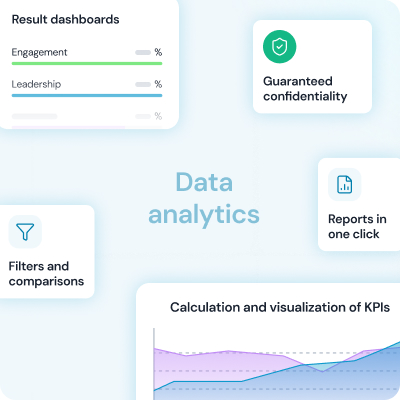
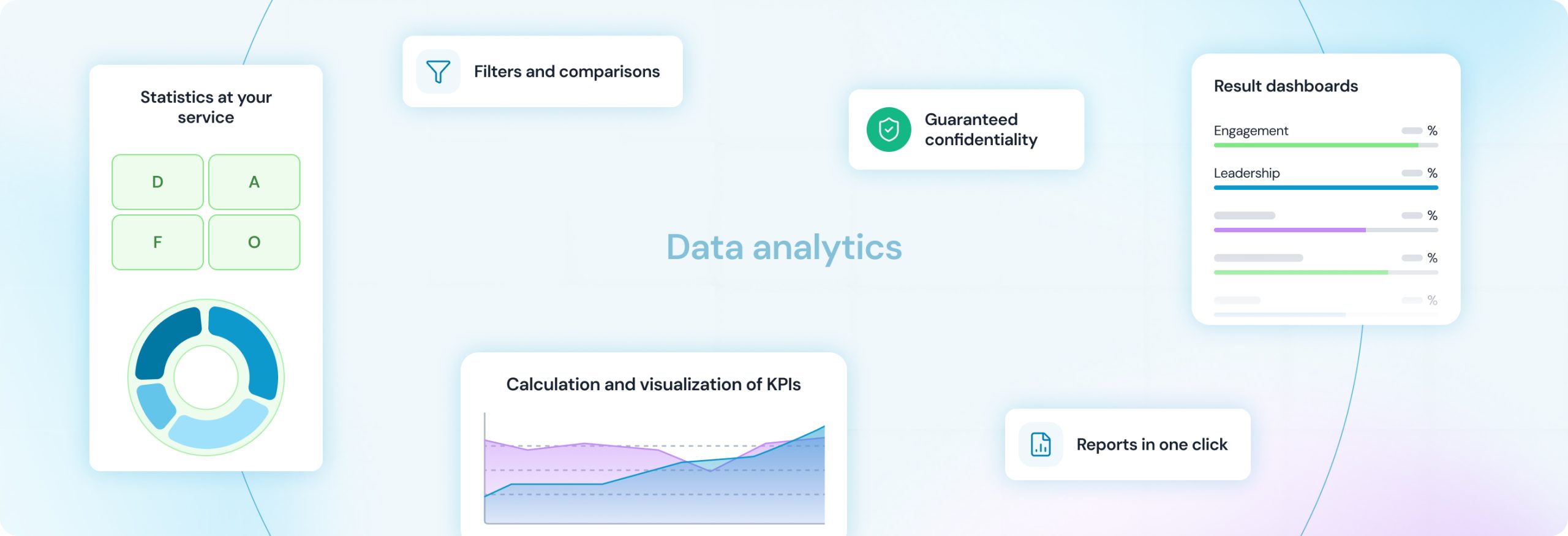
OFM turns your teams’ responses into immediate strategic decisions. Our Business Intelligence environment instantly calculates climate, engagement, and competency indicators, eliminating manual errors and saving hours of work in Excel, Power BI, SPSS, or R.

  • Automated KPIs

    Real-time calculation and visualization over thousands of responses.

  • Filters and comparisons

    Segment and compare results by department, tenure, or role in real time.

  • Reports in one click

    Generate professional reports in Word, PDF, or Excel instantly.

  • Guaranteed confidentiality

    Automatically hide results in small teams to protect anonymity.

  • Benchmarking

    Compare your results with those of the market.

  • Statistics at your service

    Generate SWOTs and visualize statistical data to make better decisions.

  • User management

    Permissions management for viewing global or partial results.

  • Dashboards

    Simplified dashboards for users who want a quick read of the results.
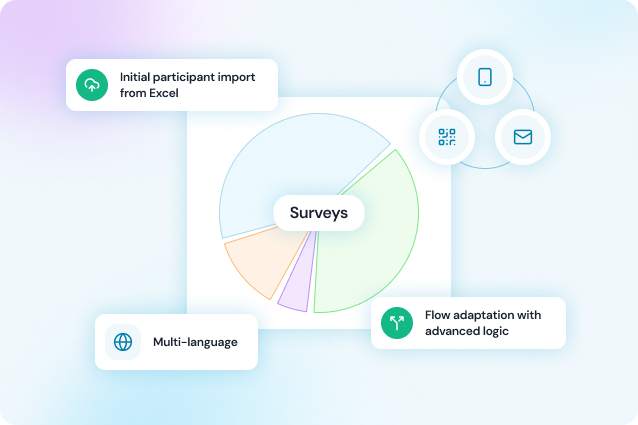
Surveys

Create easy, multi-channel workplace climate and competency assessment surveys

Design climate, engagement, and competency questionnaires in seconds. Capture feedback through multiple channels and apply conditional logic to adapt questions to each response.

  • Multi-channel: access by email, web link, encrypted codes, QR code.
  • Initial segmentation: import participants from Excel and pre-assign key variables.
  • Advanced logic: set up page jumps and flows based on the employee’s response.
  • Multilingual: supports any language for global teams.
Goal management

Turn feedback into objectives and improvement plans

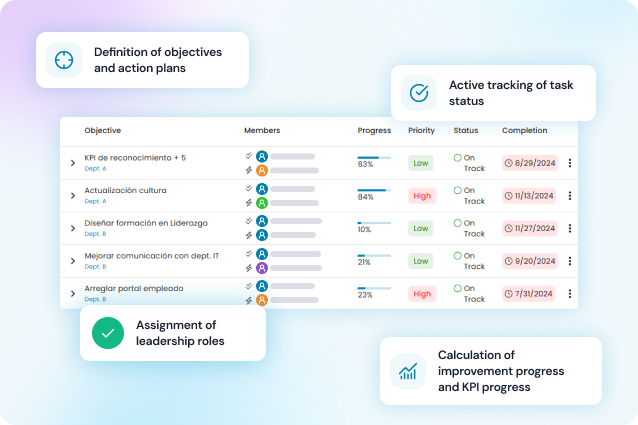
Don’t stop at the survey results—act to improve them. With Openmet YouMakePlans, you create, roll out, and track the objectives and action plans derived from feedback, both for climate improvements and for individual plans after competency assessments.

  • Definition: formalize objectives and action plans, assign owners, schedules, and metrics.
  • Active follow-up: receive automatic email alerts to drive task execution.
  • Management roles: adapt the view based on each manager’s responsibility tree.
  • KPI progress: automatically calculate the overall progress of improvements across the company.
Get in touch with our expert team and start your diagnosis.


    By starting, you accept the privacy policy.

    Blog

    Latest articles

    News, tools, techniques, and advice on workplace climate and employee experience

    work environment

    Commitment: Points to analyze in a work environment survey

    This article attempts to show the keys to OpenMet’s work environment model based on EFQM. In the 5F model, "The 5 factors for assessing human and organizational potential", the first factor is Commitment. Commitment is composed of three major indicators that orient the keys to this factor. These are: Strategy and culture, Engagement and Loyalty. 1. Strategy and culture. This indicator will help us to understand the Strategy on the one hand: whether our employees are aware of the company’s goals, their role in the company, whether they sense that the organization trusts its people and the vision of future prospects. This is critical to understanding whether "we are all headed in the same direction.” Culture is analyzed through Management’s orientation to recognition, alignment with the goals of the latter and knowledge of and adherence to the values ​​and culture of the company. 2. Engagement. This is the second indicator of the Commitment factor. Engagement concerns direct vision, the work itself, and – indirectly – the organization. Awareness of the objectives and their clarity and willingness to work over and above what is expected are the items that best represent this direct vision. The pride of belonging to the company and even the department are key for organizational engagement. 3. Loyalty. In this indicator, several general items are analyzed that we can consider key and as having the greatest influence on commitment. On the one hand, the perception of being a good place to work and contentment with the work done as an employee and, on the other, the recommendation to others as a good place to work and repetition in the choice of current company. In summary, Commitment in the 5F work environment model relates to strategic aspects of the company, the future vision of the company, the alignment with values ​​and culture, engagement with one's own work and with the organization, loyalty to the organization, recommending to others, pride in what is done and the general perception of the company as being a good place to work. More information on Work Environment.

    Delegation

    Delegation, not instruction: Concept and evaluation

    Delegation is one of the necessary skills of any Leader. Good delegation is far more than the transfer of tasks and functions. To delegate properly, we need to analyze the skills, personality and experience of the people to whom we want to delegate a task. Being a good leader means being knowledgeable of the qualities and skills of team members. The person assigning the responsibilities also needs to clearly explain what they expect and provide the tools, support and funds needed to carry out the task. It is very important that the person delegating the task grants autonomy and decision-making capacity to the other person, trusting in their abilities while offering help and support when the situation so requires. Only leaders who meet these requirements will be able to retain and attract the best talent for the organization, improving the work environment and increasing business productivity and profits. To analyze the index of delegation in a company, we need measuring tools and subsequent support. There are two basic measuring tools to determine this index: Work Environment Study and Competency-based Assessment. The Work Environment will tell us how much the leaders delegate in the opinion of different reference groups. Work Environment also gives an insight into the perception of general leadership, commitment, talent management, organizational efficiency and assessment of hygiene factors Competency-based Assessment can be useful in two ways: to define the desired competencies and to find out the their development index. This is a more personal type of assessment where, besides analyzing the delegation skills of the leader, we can analyze the response of different team members to the delegation. An effective assessment allows us to correct delegation behaviors through the opinions of others and self-criticism.

    Satisfacción clientes encuestas

    Satisfaction surveys: How to choose the most suitable type for each case

    When our clients ask for help with their projects to assess customer satisfaction or experience, there is one important aspect that needs to be decided from the word “Go” because it will dictate certain features of the study: the decision on how and which is the best system for conducting interviews or customer satisfaction surveys. Telephone? Face to face? Electronic? This decision is typically made based on different reasons that we wish to summarize in this blog post. Satisfaction survey: types of customer surveys and interviews The tools available for obtaining feedback or interviewing customers generally end up being one of the three types shown in the table below. Each type of satisfaction survey has its pros and cons that we will need to evaluate based on the characteristics, aims and budget of the study. Type of survey Pros Cons Most common applications Face to face · The survey can be done on the spot, at the same time as the product or service is consumed · High cost · Key customer surveys · The required sample can be selected dynamically and in situ · If customers are geographically disperse, it is more expensive · Surveys with more qualitative information · Objects or information can be shown directly to the customer · Takes longer to complete · Long, complex surveys · Good answers to open questions · Surveys where the customers are together in a single place and time · The customer can be asked to complete certain aspects · On-the-spot surveys at the point of service By telephone · We can have a lot of control over the interview content and exact process · Average cost · All types of general survey · The selection of the right sample can be very good · It can be boring if lots of similar questions need to be answered (e.g. with scoring scales) · Some customers may be difficult to find · Visual information cannot be displayed Electronic/Web · Low cost · Low indexes of response · B2B surveys with a strong or fixed relationship with the customer · A large number of or all the customers can be surveyed · There is nobody to clarify questions · Surveys to users of websites, cell phones or apps · Customers can respond when it suits them · The answers to open questions tend to be poor · Surveys integrated with business software (CRM, sales outlet, reception, etc.) · Video and images can be inserted · Subsequent statistical processing may be needed for the selection of the correct sample · Internal satisfaction surveys to company staff · Easy to answer and usually quick for customers · Automated, regular, very short or unassisted surveys (e.g. newsstands) · Studies are quick to conduct To find out more about satisfaction surveys, we recommend reading other articles from our blog here.