Customer experience and satisfaction software

Put the customer at the heart of your business

Openmet Feedback Manager helps you assess, analyze, interpret, make improvement decisions, and follow up on your customer satisfaction and experience projects.

Contact us

Hundreds of companies trust Openmet

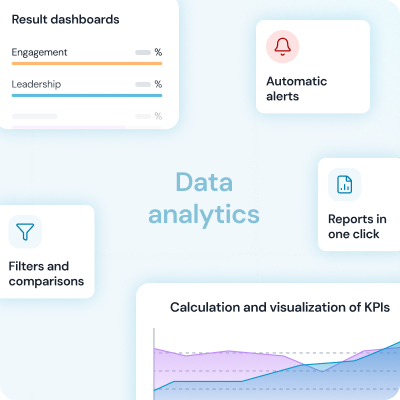
DATA ANALYTICS

Advanced analytics to understand what your customers are like and what they need

OFM turns your customers’ responses into immediate strategic decisions. Our Business Intelligence environment calculates indicators like NPS instantly, eliminating manual errors and saving hours of work in Excel, Power BI, SPSS, or R.

  • Automated KPIs

    Real-time calculation and visualization over thousands of responses.

  • Filters and comparisons

    Segment and compare results by aspects such as customer type, ABC, or geography in real time.

  • Reports in one click

    Generate professional reports in Word, PDF, or Excel instantly.

  • OFM integration

    Generate automatic surveys for your customers.

  • Alarms

    Send automatic alerts when a customer has low scores.

  • Statistics at your service

    Generate SWOTs, ANOVAs, and automatically weight results and KPIs based on the variable of your choice.

  • User management

    Permissions management for viewing global or partial results.

  • Dashboards

    Simplified dashboards for users who want a quick read of the results.
Surveys

Create easy, multi-channel customer satisfaction or experience assessment surveys

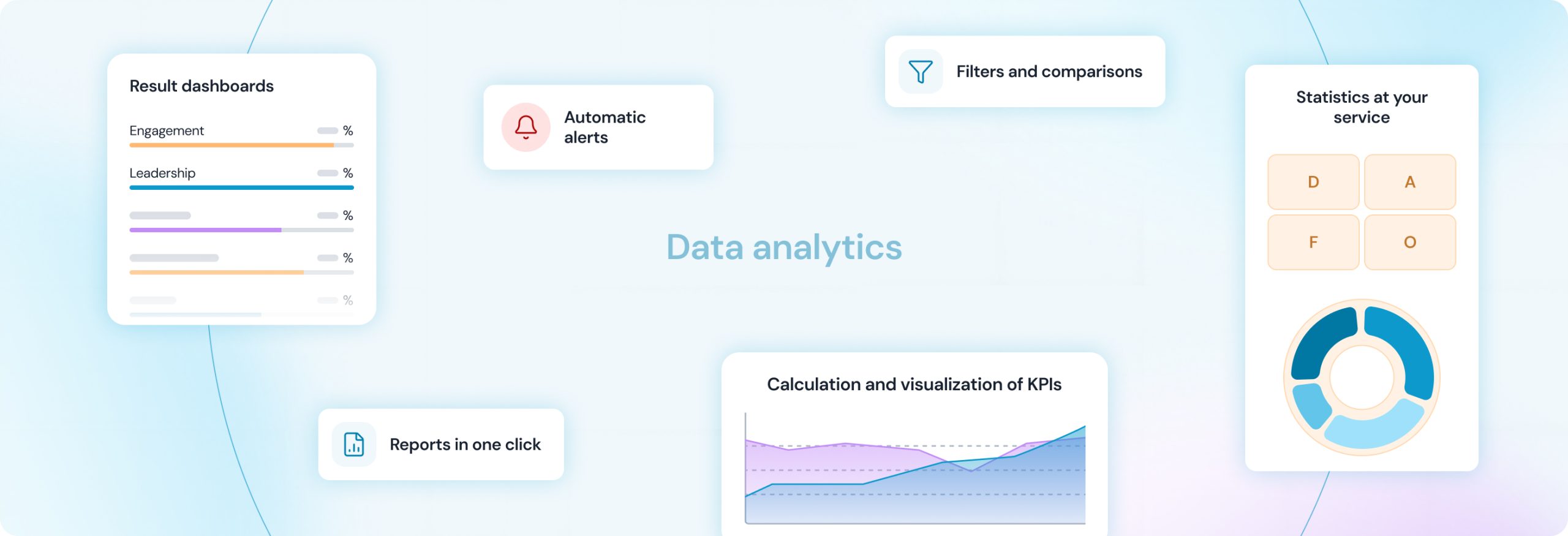
Design customer satisfaction and experience questionnaires in seconds. Capture the voice of the customer through multiple channels and adapt questions to each response with conditional logic.

  • Multi-channel: access by email, web link, encrypted codes, QR code, or SMS.
  • Initial segmentation: import customers from Excel and pre-assign key variables.
  • Advanced logic: set up page jumps and flows based on the response.
  • Multilingual: supports any language for companies with global customers.
Goal management

Turn your customers' feedback into decisions, objectives, and improvement plans for your team

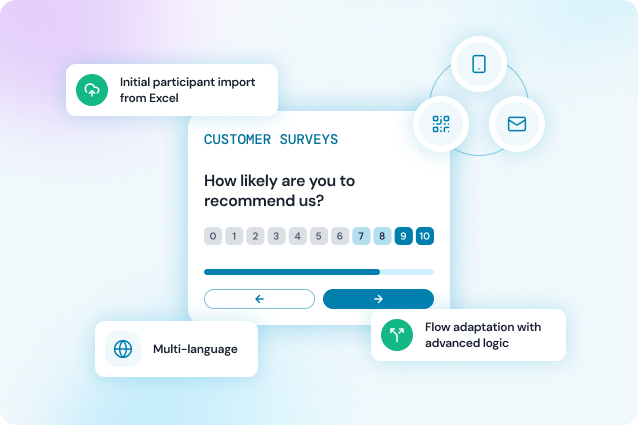
Don’t stop at the survey results—act to improve them. With Openmet YouMakePlans, you create, roll out, and track the objectives and action plans derived from your customers’ feedback.

  • Goal definition: formalize objectives and action plans, assign owners, schedules, and metrics.
  • Active follow-up: receive automatic email alerts to drive task execution.
  • Management roles: adapt the view based on each manager’s responsibility tree.
  • KPI progress: automatically calculate the overall progress of improvements across the company.
Get in touch with our expert team and start your project.


    By starting, you accept the privacy policy.

    Blog

    Latest articles

    News, tools, techniques, and advice on workplace climate and employee experience

    electronic customer surveys

    Electronic customer surveys: Asking more with fewer questions

    In our day-to-day work as a firm that conducts customer satisfaction and experience projects and surveys, we often come across the same dilemma:We want to ask and find out lots of details about our customers…But we can't ask everything we’d like to because the survey would be too long (which would lead to other problems such as abandonment, poor quality responses and increased costs, among others)Electronic customer surveys.In this post, we outline three basic strategies that we use in customer surveys to solve this problem at least in part and achieve what may otherwise seem impossible: ask more with fewer questions.Three basic strategies for asking more with fewer questions in electronic surveys1. Pre-segmentationThis strategy could alternatively be called “Never ask what you already know”. Although it may seem obvious, many customer surveys and forms do not heed this rule and ask customers about aspects that are already in the company databases. This should never happen. A good survey should pre-load this data to make it available during the survey and results analysis and not pass on to customers the internal data management shortcomings of the company.Generally, two typologies of customer are surveyed:A. “Known” customers (or B2B customers, on whom we already have information in the CRM or other data sources).These customers are in the company database and we probably already have information on aspects such as:The name of the customer or their addressThe area where they live or the store where they usually buyThe type of products or services that the customer purchasesTheir annual revenue or classification in the customer ABCThe sales channel they use… and many othersB. "Unknown" customers (or B2C customers, anonymous customers, such as customers who go to a restaurant chain or visit a website).Although these customers are not in the databases, it is also possible to pre-segment them using information that we may already have, such as the geographical area or establishment where the survey is conducted. We can also obtain automatic information on customers through other means, including the use of social WiFi (the customer gets free wireless access in exchange for sharing details of their social profile). 2. Conditional questions and answersWe could also call this strategy “Don’t ask what doesn’t concern you”. The aim is to make sure – based on the responses and customer data we already have – that all the questions asked of a customer are relevant and can be answered.To adapt the survey to the customer profile, we need to use conditional questions and answers, hiding and showing whole parts of the customer satisfaction survey based on the information we already have. For example, if we have preloaded customer data, we can ask only about the specific product or service that we know they use.The ultimate aim is to ensure that all of our questions are relevant and can be answered by the customer and that we are not wasting our "shots" (or questions) unnecessarily. 3. Random questionsThis strategy could also be called “Divide and conquer” or “Jigsaw survey”. The idea is to divide the survey into parts as small as we would like so that each customer only answers a few questions. The questions will be different for each customer.This system allows us to obtain aggregate results (responses from all customers) with data on answers to lots of questions, but with partial samples for each. In other words, we can design a survey that is as complex as we like provided that our sample is large enough to be divided into small parts that can be selected at random to minimize any bias (most survey software incorporate this option). ConclusionTypically, a good satisfaction survey design gives us far more information on customers – both their characteristics and their opinions – without having to answer to tiresome questionnaires.Three possible strategies are:pre-segmentationconditional questionsrandom questionsWith these strategies we can achieve the seemingly impossible: ask more with fewer questions. 

    Satisfacción clientes encuestas

    Satisfaction surveys: How to choose the most suitable type for each case

    When our clients ask for help with their projects to assess customer satisfaction or experience, there is one important aspect that needs to be decided from the word “Go” because it will dictate certain features of the study: the decision on how and which is the best system for conducting interviews or customer satisfaction surveys. Telephone? Face to face? Electronic? This decision is typically made based on different reasons that we wish to summarize in this blog post. Satisfaction survey: types of customer surveys and interviews The tools available for obtaining feedback or interviewing customers generally end up being one of the three types shown in the table below. Each type of satisfaction survey has its pros and cons that we will need to evaluate based on the characteristics, aims and budget of the study. Type of survey Pros Cons Most common applications Face to face · The survey can be done on the spot, at the same time as the product or service is consumed · High cost · Key customer surveys · The required sample can be selected dynamically and in situ · If customers are geographically disperse, it is more expensive · Surveys with more qualitative information · Objects or information can be shown directly to the customer · Takes longer to complete · Long, complex surveys · Good answers to open questions · Surveys where the customers are together in a single place and time · The customer can be asked to complete certain aspects · On-the-spot surveys at the point of service By telephone · We can have a lot of control over the interview content and exact process · Average cost · All types of general survey · The selection of the right sample can be very good · It can be boring if lots of similar questions need to be answered (e.g. with scoring scales) · Some customers may be difficult to find · Visual information cannot be displayed Electronic/Web · Low cost · Low indexes of response · B2B surveys with a strong or fixed relationship with the customer · A large number of or all the customers can be surveyed · There is nobody to clarify questions · Surveys to users of websites, cell phones or apps · Customers can respond when it suits them · The answers to open questions tend to be poor · Surveys integrated with business software (CRM, sales outlet, reception, etc.) · Video and images can be inserted · Subsequent statistical processing may be needed for the selection of the correct sample · Internal satisfaction surveys to company staff · Easy to answer and usually quick for customers · Automated, regular, very short or unassisted surveys (e.g. newsstands) · Studies are quick to conduct To find out more about satisfaction surveys, we recommend reading other articles from our blog here.

    customer satisfaction billing

    Customer satisfaction and revenue weighting analysis

    Most of the studies on customer experience and customer satisfaction surveys that we do at OpenMet typically include an analysis weighting the results by revenues. This post will briefly explain this type of analysis of results and its main features. What is revenue weighting? Briefly, revenue weighting is a way to analyze customer results by magnifying the results of the customers giving the greatest revenues and minimizing the results of those with the least. The main reason for using revenue weighting is that companies typically look to target the needs of their most profitable customers with their action plans and strategies, thereby obtaining greater profits and turnover. When we use weighting, the indicators of customer satisfaction or metrics on customer experience will change (sometimes very significantly), so our conclusions will be much more representative of the real importance of each customer for the company. Let’s look at an example using the classic Pareto principle: if a company obtains 80% of its turnover from 20% of its customers, the opinions of this more lucrative 20% of its customers will logically have a greater weight in the indicators of satisfaction or loyalty. If we use the usual method (e.g. arithmetic means) to analyze customer responses, the responses of this 20% will be diluted by the 80% of the other customers. The upshot is that we will have a customer satisfaction indicator in our scorecard that doesn’t really fit in with the company's priorities. How does revenue weighting work? The most common solution is to change all calculations of results to use weighted averages. To choose the weighting to apply to each customer taking part in the survey, OpenMet basically uses two strategies: 1.Strict weighting: the revenue from each customer is used as the weighting. This system works well when there are small differences in revenues from each customer. By contrast, when the revenue of some customers is huge compared to others (e.g. several customers invoice millions of Euros, while lots of others invoice just a few thousand), the system poses problems because the opinions of smaller customers are virtually eliminated from the average due to their low relative weight. 2.ABC weighting: weighting is done by associating a relative weight to groups of customers, for example, based on the typical ABC grouping (or similar). The weight assigned to each customer depends on the weight assigned to its group. The weight of each group of customers is decided externally by taking into account the priorities of the company (e.g. A customers weighting = 10, B customers weighting = 3, C customers weighting = 1). This strategy gives good results in some cases, such as when strategy 1 is not suitable. However, it can be difficult to assign weights because the weight of the group is somewhat arbitrary. Conclusion The weighting of results by revenue is very important for a good analysis of customer satisfaction or experience. It gives us indicators and metrics that offer a truer picture of the company and allows us to reach better conclusions and define action plans more precisely. More information on Customer Satisfaction.